The Lower Zambezi is a phenomenally scenic National Park sitting on the northern bank of the mighty Zambezi River. Just across the water is the world-famous Mana Pools NP and in many ways, the Lower Zambezi matches and exceeds the experience offered there. For those of us who have known the Lower Zambezi for many years, it’s exciting to see the area building the reputation that it deserves, with an increase in interest from photography groups over recent years.
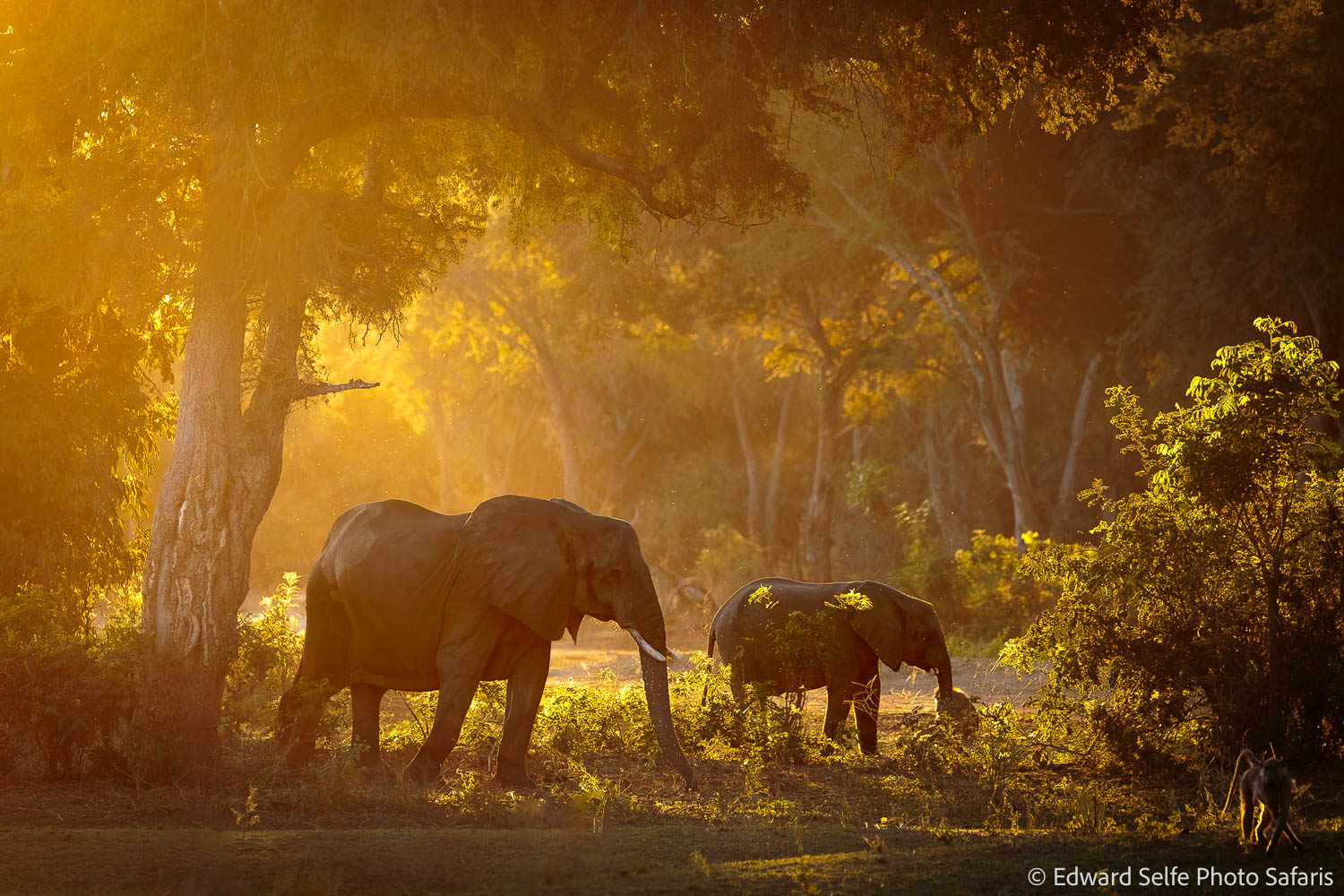
The ‘Lower Zam’ has much to offer with a range of habitats, landscapes and special wildlife. But the most impressive photographic opportunities come from the mature Winterthorn forests in the central and eastern parts of the park. In these areas, tall trees are evenly spaced across a wide floodplain, their branching canopies spreading to touch each other. With almost no understory in many areas, this creates a stunning canvas as a backdrop for photos where subjects can be framed among the vast trees and the light filtered through the soft canopy.
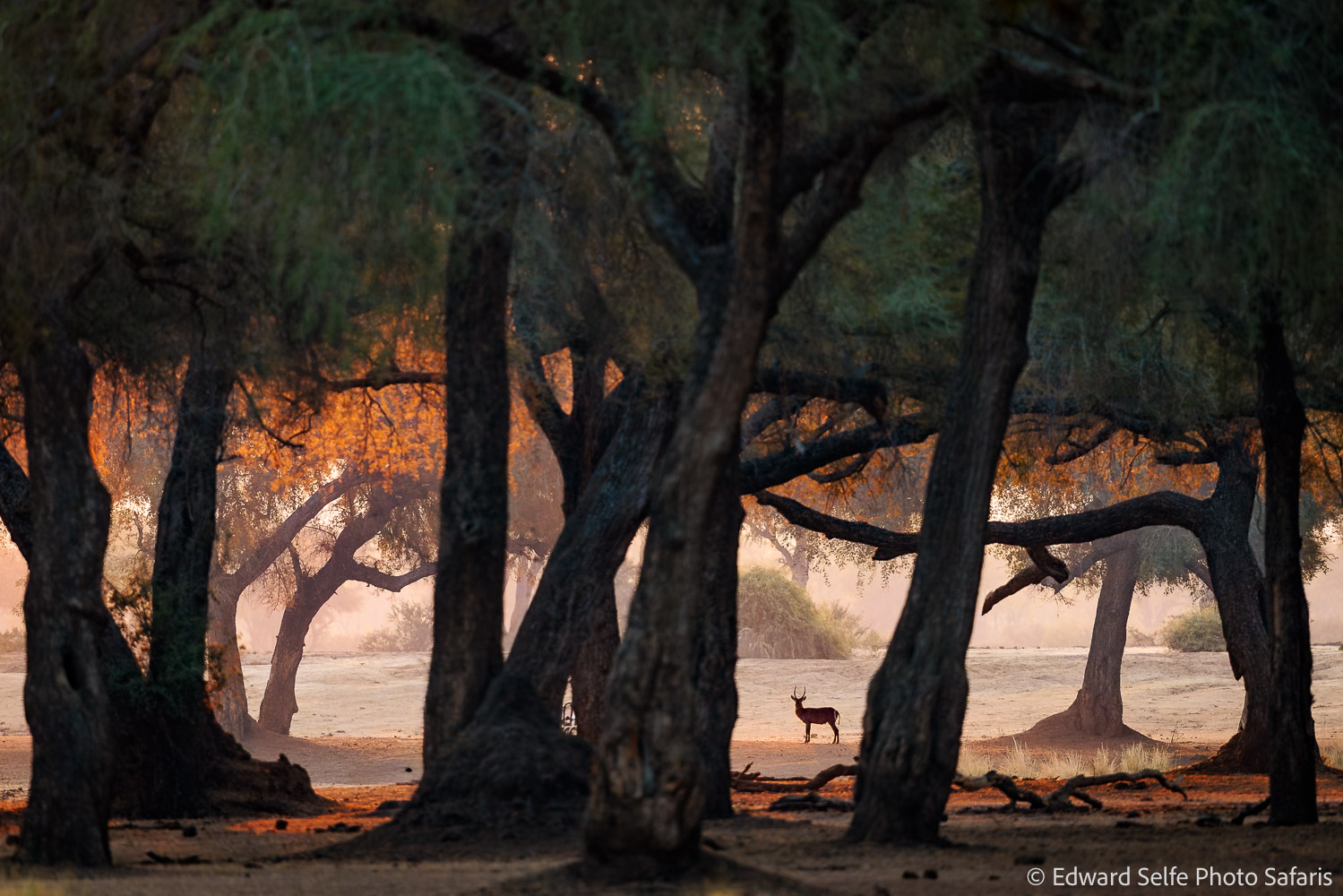
There is beauty everywhere. Sometimes it’s hard to know where to look, or where to point your lens. This is certainly an environment where it seems that it must be easy to make high-impact images, but in fact, creating something that translates into a strong still photo is not straightforward. A scene which is beautiful to the eye – with the benefits of animals’ movement and the brain’s ability to ‘remove’ unwanted elements – might not work well for a static frame.
Take the below image; I remember it well. A large bull elephant was approaching us through the forest; he looked large and imposing. However, the still image (without the benefit of movement) has far less impact. The angle of the shot (looking slightly down on the subject) and the lack of movement, means that the elephant does not stand out as I intended – he is heavily ‘blended’ with the tree-trunks behind which are the same colour and texture as his hide.
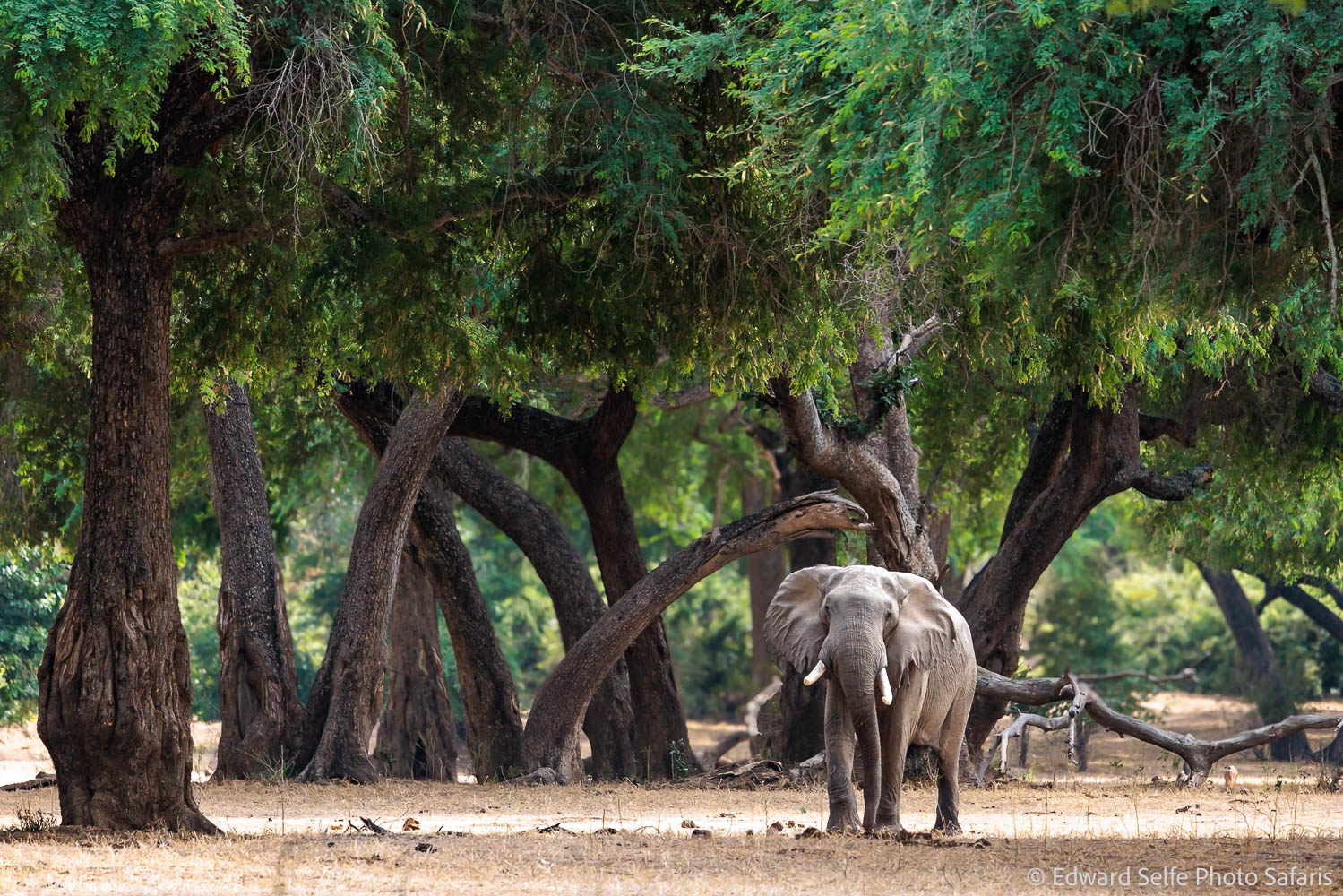
To create something with huge and immediate impact, there are several factors that need to be considered. The most important are composition/framing and lighting. Ideally, the subject and the environment should complement each other, not conflict, and the lighting should work to accentuate the subject(s) in the frame.
Composition is a complex and very personal part of nature photography; it is one area where 4 people in the same vehicle can introduce individuality to their images by framing in totally different ways. Therefore, I prefer not to be too prescriptive in my guidance on composition, as I want to avoid removing people’s individual creativity. However, I think there are a few guidelines that can be applied universally without taking away freedom of composition:
- I like to have a strong shape (usually a tree trunk) at the left- and right-hand ends of the image to frame the scene and ensure the eye is not drawn away by bright edges.
- I like to be able to see the bases of the trees which appear in the image, as this grounds the frame and avoids it feeling like trees are hanging in space.
- I prefer to make sure that the subject, whether elephant, impala, waterbuck or lion, is side on, creating a strong profile shape, so that it’s immediately identified by the viewer.
And I find that making sure the subject is either much lighter, or much darker, than the surroundings, is the best way to show off the main feature of the image; if you can identify a scene where the landscape is dark and the subject is bright, or where the subject is a dark silhouetted shape among the trees, this works best in my experience.
Below are a number of images which illustrate some of the techniques talked about above. Additionally, points to consider are: the angle of the light (I much prefer to shoot into the light); making sure to notice and take care of any foreground details like shrubbery and fallen branches; watching for atmospheric factors like dust, scattered light and strong rays which might add to the frame.
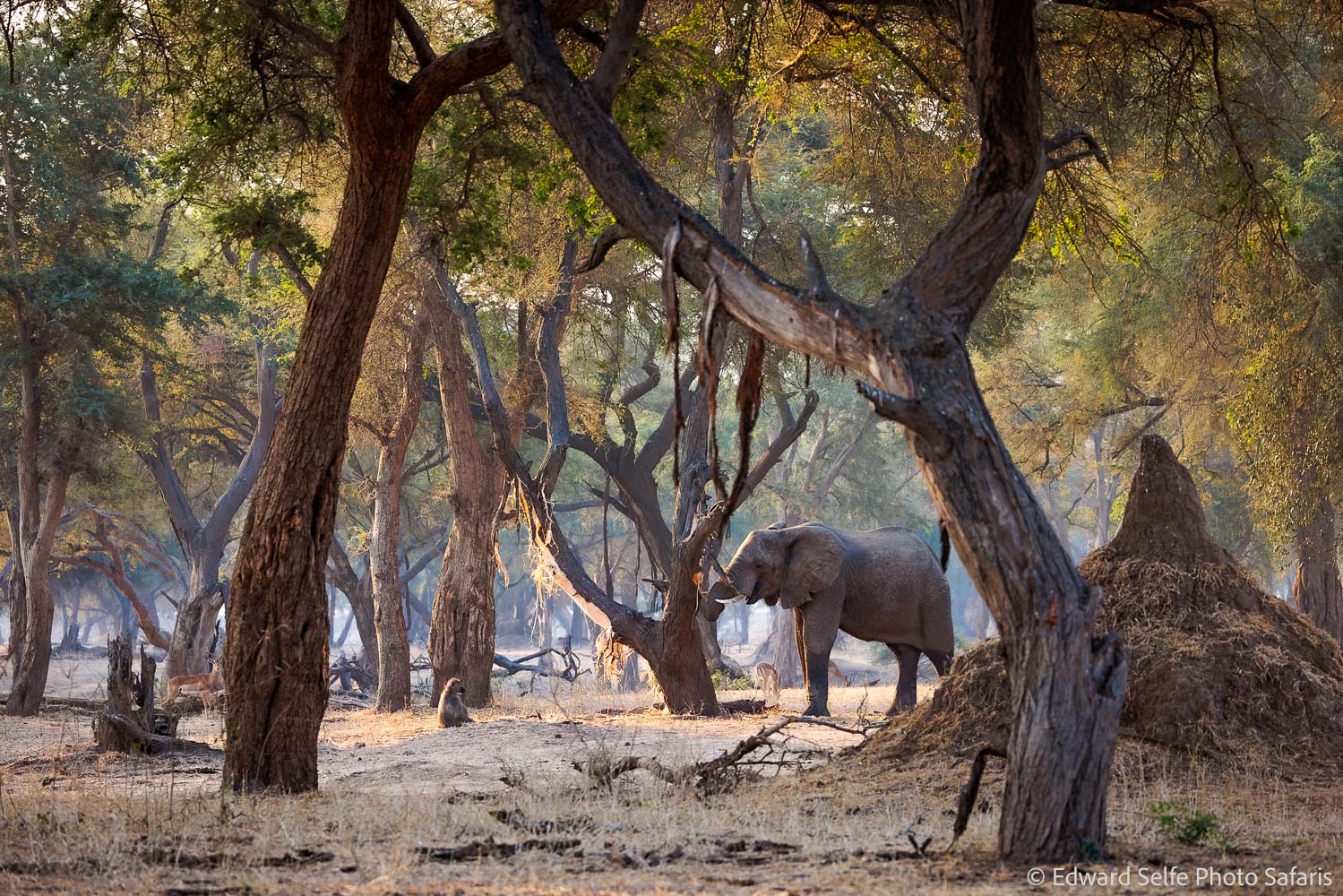
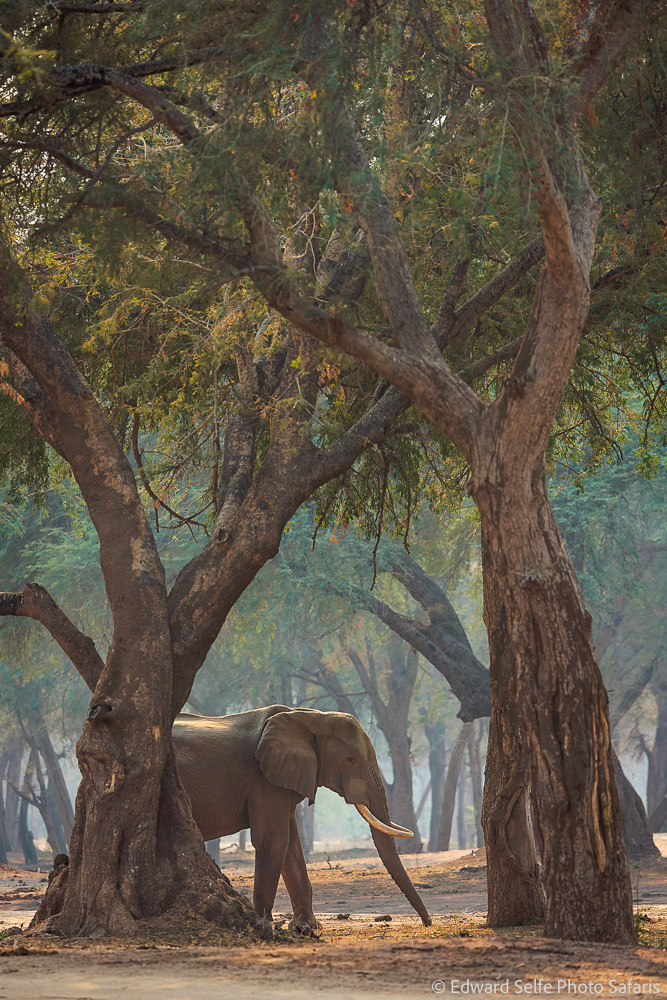
The above image shows a classic Lower Zam scene. An elephant stripping the bark off a whitethorn tree to feed on the sugars that are carried in the cambium layer. In the foreground, a large termite mound adds interest to the image, and the light is soft and dusty, helping to show off the landscape and background colours without hard contrast. Shooting ‘past’ the foreground tree conveys the feeling that we are looking through a massive forest and that the elephant is ‘in’ the forest (rather than ‘in front’ of the forest) which is important. But that tree is growing from a lower area of ground than the rest of the scene, meaning that I had to include more foreground (below the elephant) than I normally would in order to see the base of that tree. It doesn’t make or break the image, but it’s worth considering what the image would look like if I had cut it off at the base of the termite mound…. I believe the foreground tree would have looked very awkward.
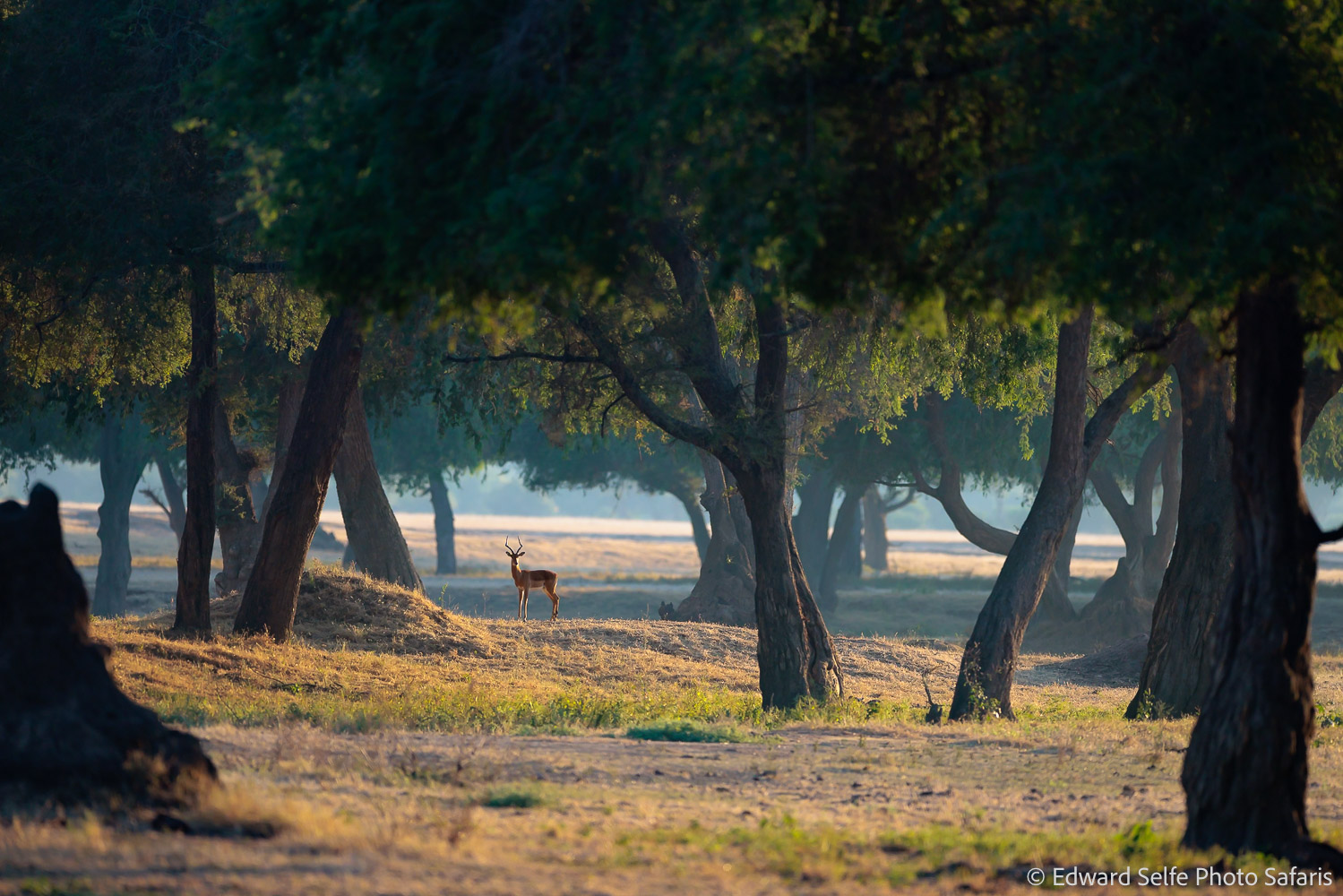
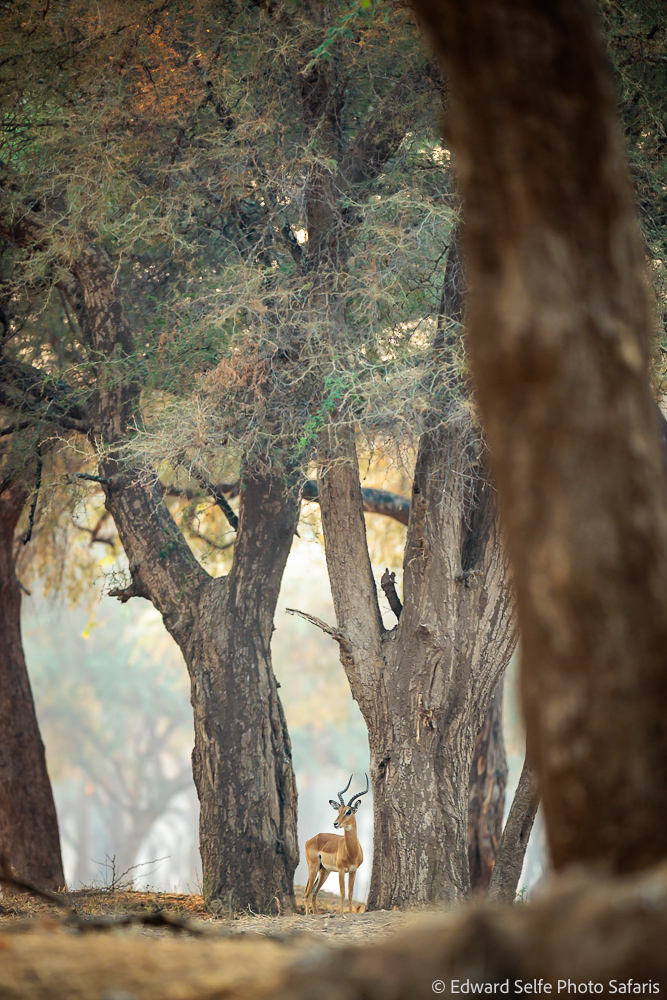
A gorgeous scene. The image is strong because the light is beautiful, the canopy is ‘complete’, meaning that there is no white sky showing through, and the impala subject is immediately noticed by the viewer. The large open space in the foreground is in equal part a leading line (towards the impala) and a dead space…which might irk some viewers. We might think that bringing the impala forward into the open space would work better, but then it would not have been on a ridge, and would not have stood out so well. Additionally, the dark background behind much of the impala’s shape is helpful in making sure it jumps out of the frame.
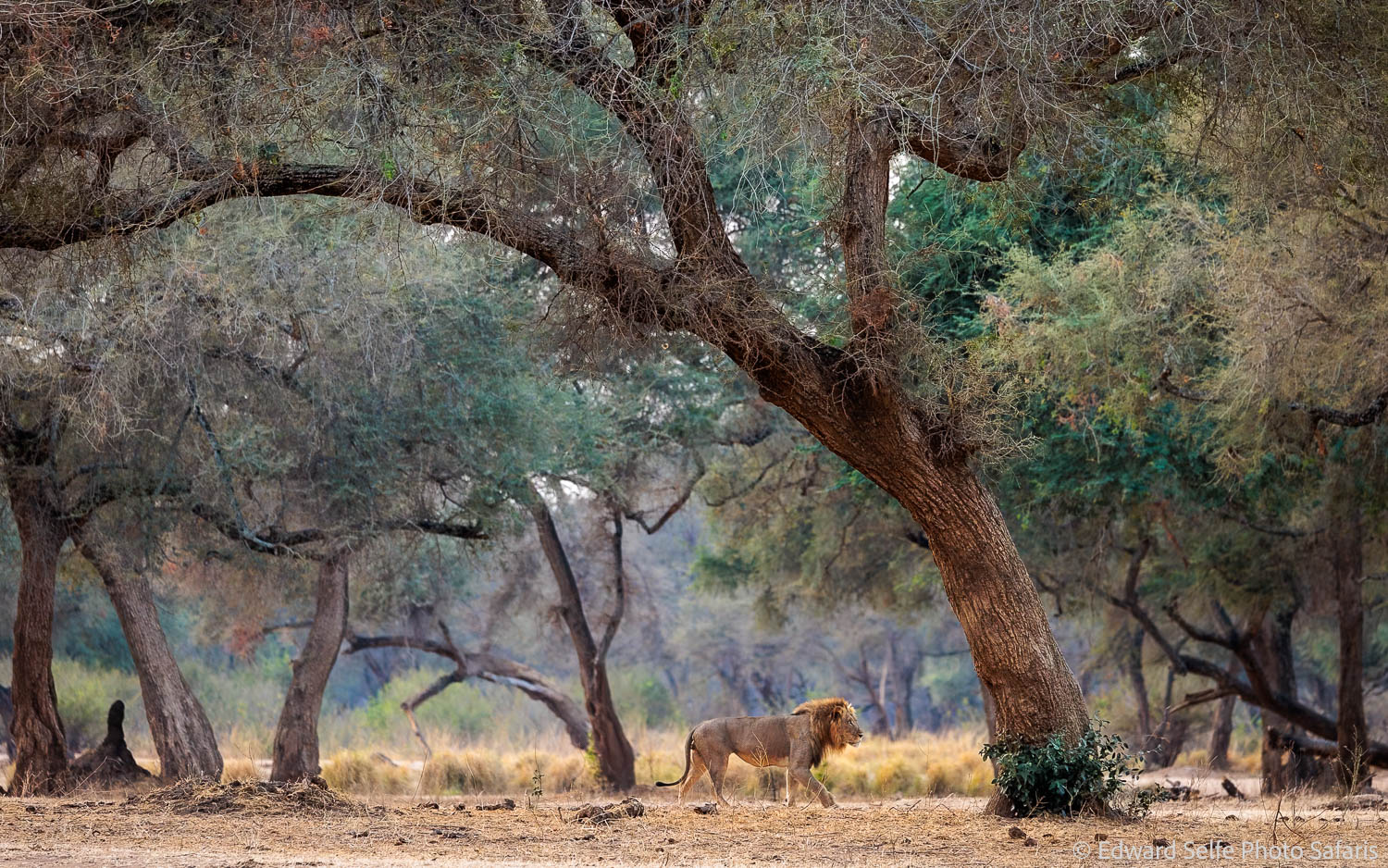
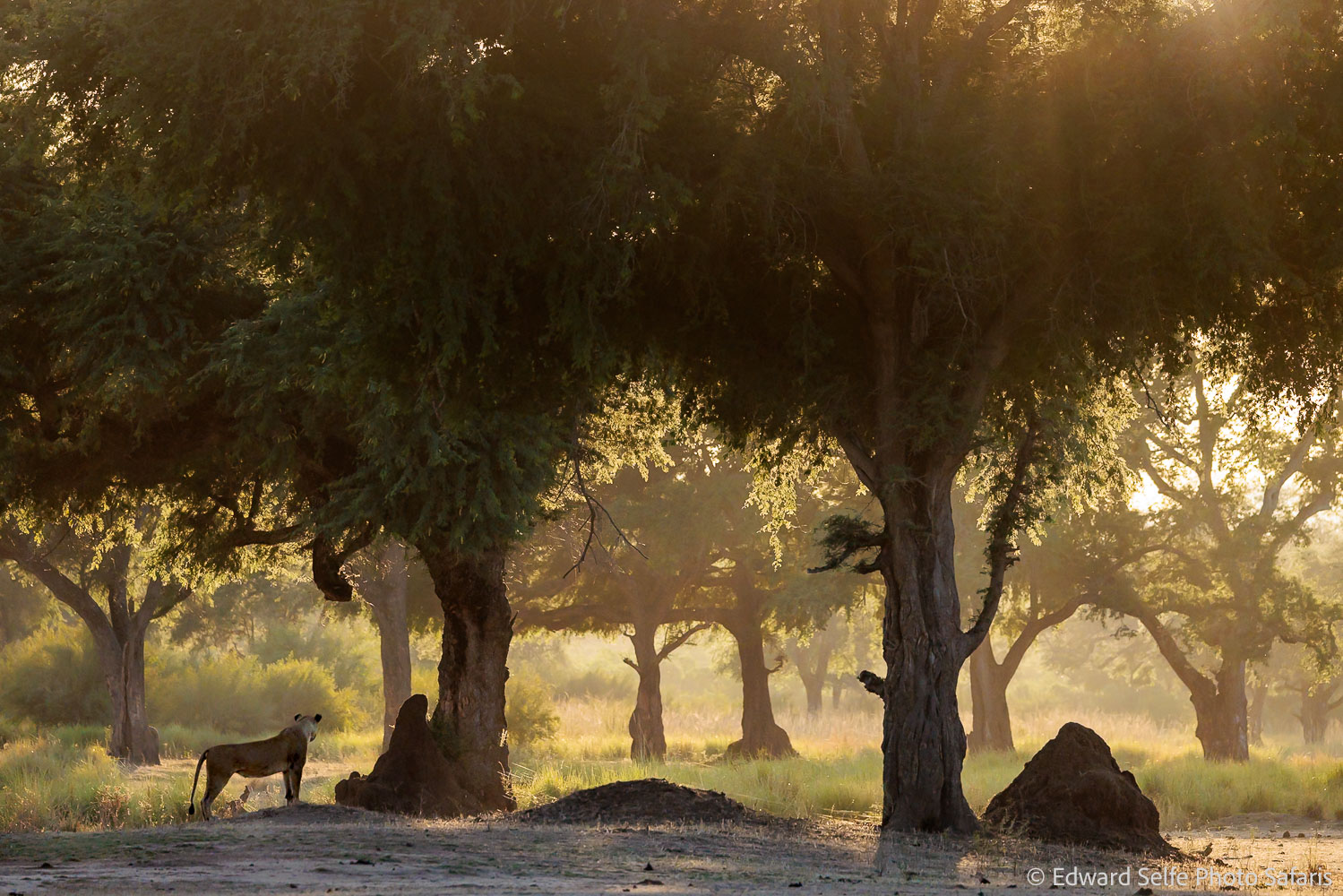
I love this image as it captures many of the things that I love about the Lower Zam; the soft light, the promise of highly visible big predators moving across the landscape, and a naturally beautiful landscape shot in its own right – the foreground tree provides a strong natural frame with lots of ‘arches’ in which we can place our subjects. I think the best animalscape images are made when the original landscape image is strong and then the subject fits into it and adds the final detail. We arrived just too late for me to shoot the lion in the previous archway, which would have allowed more space in front of the lion and balanced the image better.
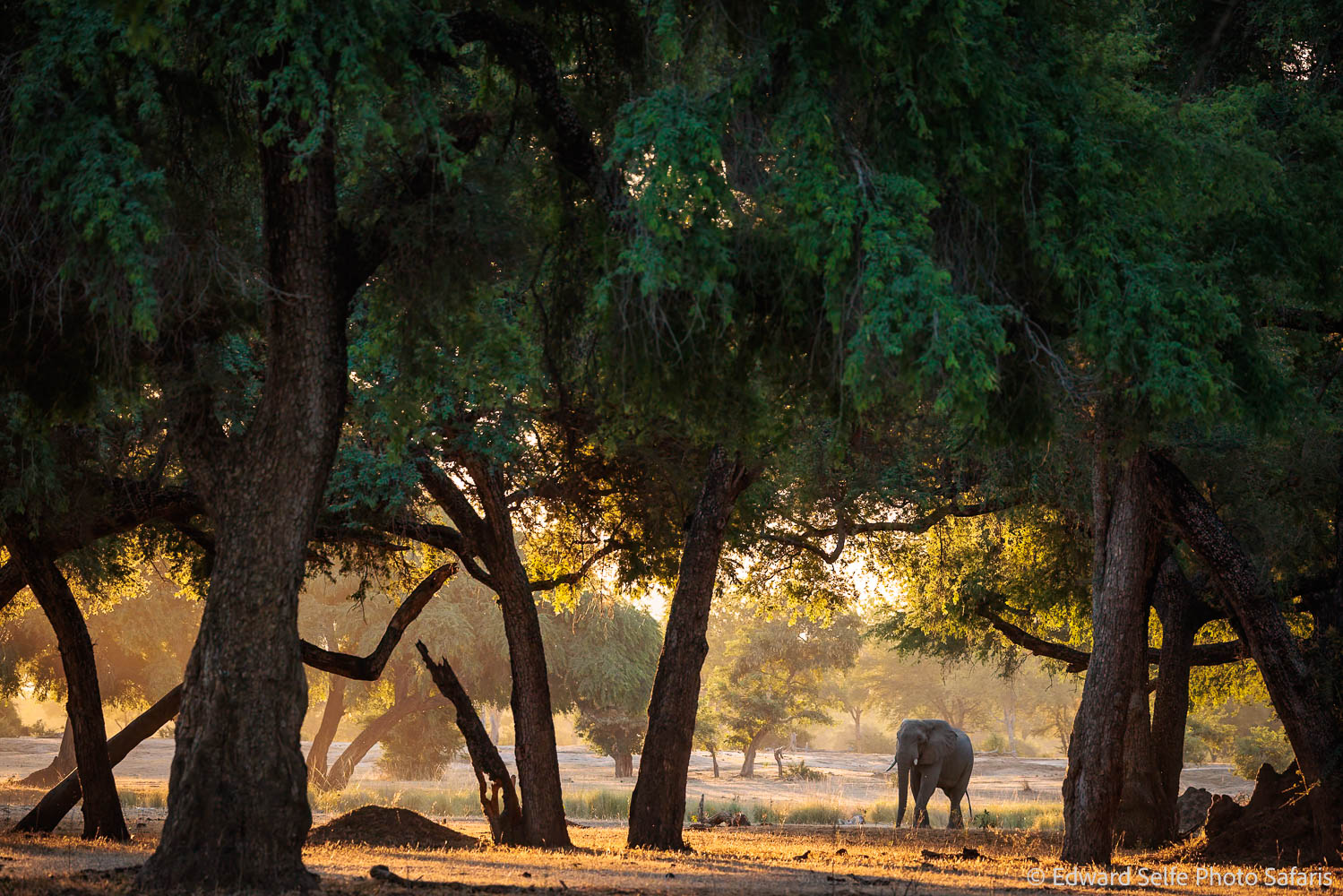
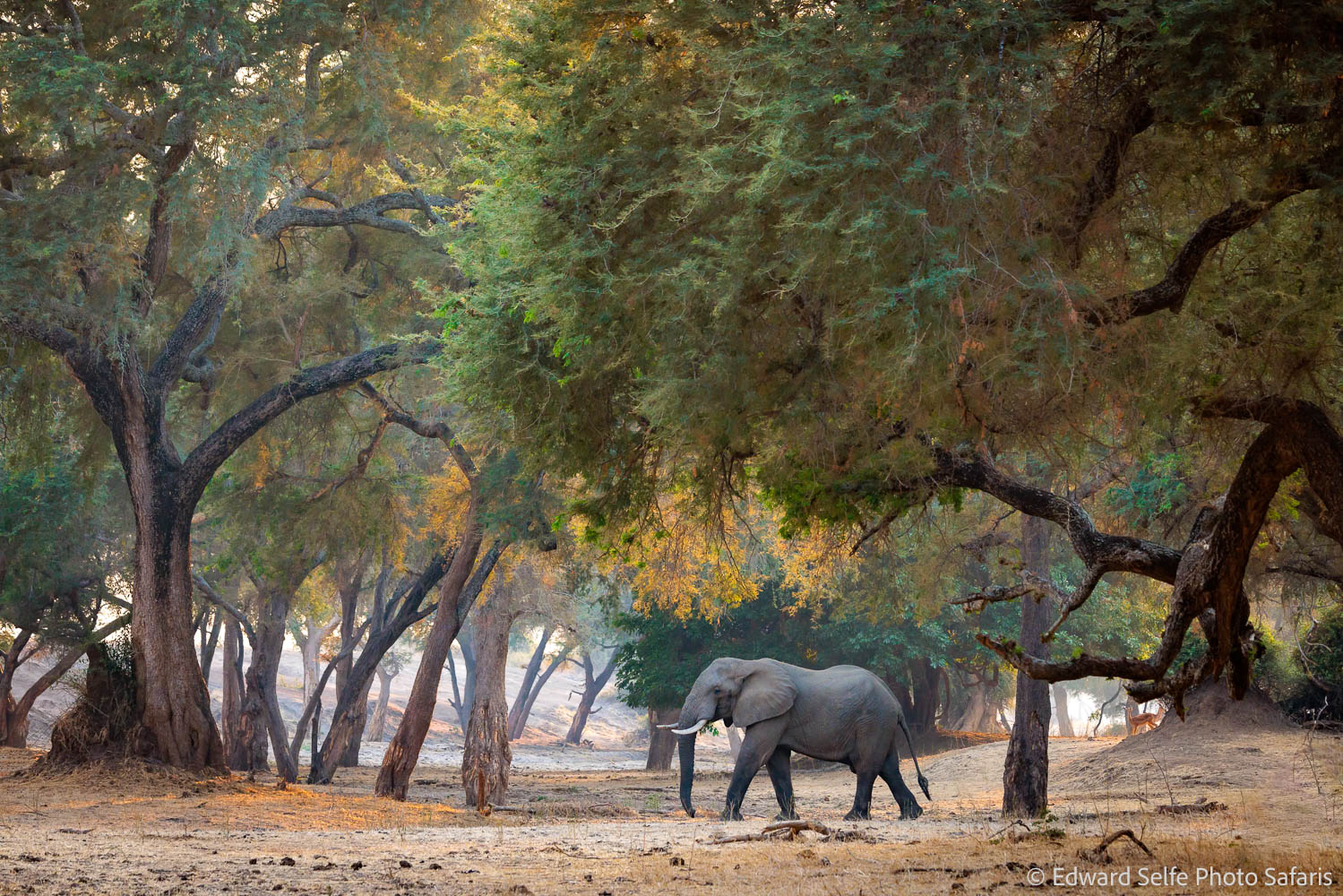
To me, this image is almost perfect…the light, the composition and the placement of the elephant. When I say that it’s ‘perfect’, I don’t mean that I created a perfect image, but that all the elements came together just right so that I had the best chance to get a great shot…. There is a lot that we can’t control when trying to combine landscape, light and unpredictable subjects! The final detail that would have brought this image up a notch would have been the elephant turning side-on so that it created a strong profile silhouette.
Sometimes the composition doesn’t work in horizontal/landscape orientation, and it’s better to turn the camera vertical. I do this when the arrangement of the trees and/or the density of the canopy doesn’t allow for a full-width image. It doesn’t show the scale of the landscape so well, but it sometimes allows an image where one wouldn’t be possible otherwise.
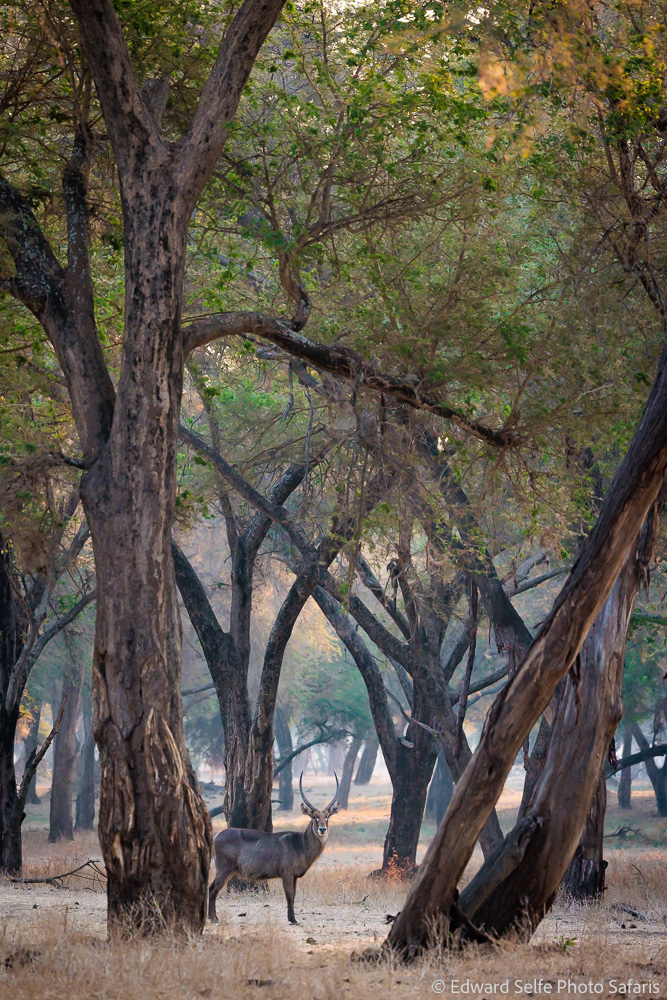
I love the simplicity of this image; the trees are arranged perfectly and the waterbuck’s placement just behind the tree, some distance ‘into’ the image, conveys the size, scale and depth of the forest.
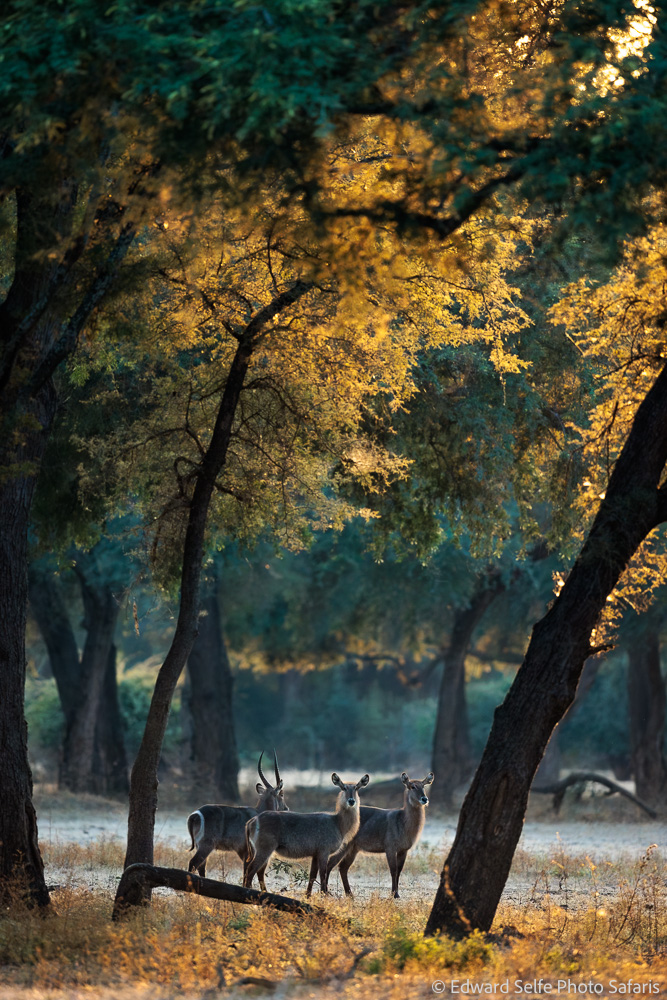
This image tells several stories in my memory; firstly, always shoot where the light is best, even if the subject is not one of the big icons, and, secondly when there are predators around, look elsewhere to see how the prey species are reacting. This image was made when there were wild dogs rushing across the floodplain – the dogs were far in the distance, but the reaction of the waterbuck is what made the image.
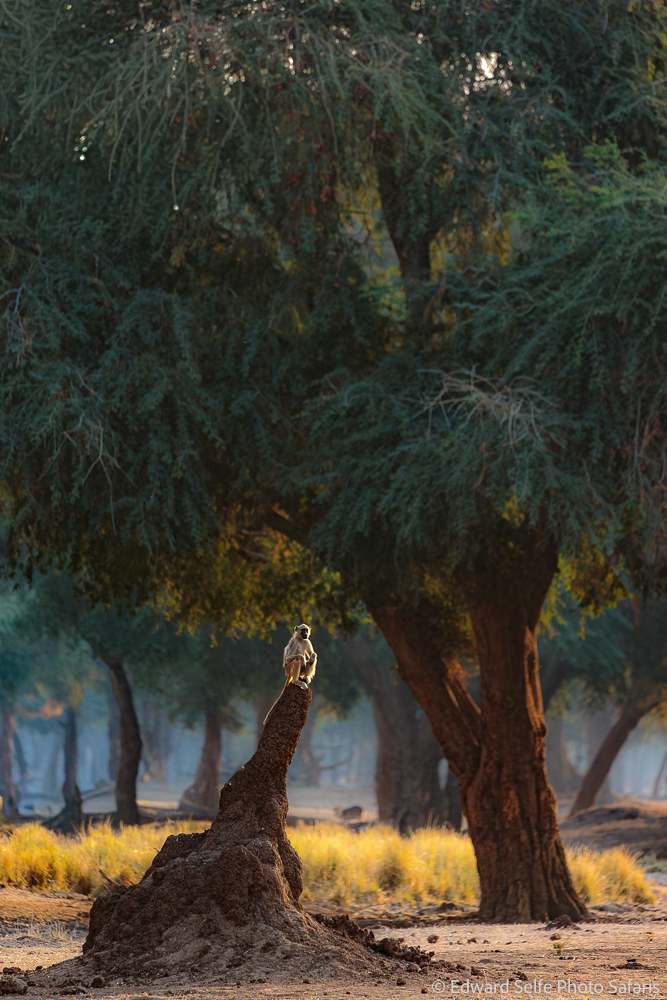
Even the smaller subjects make great images when carefully positioned in the frame. By moving the vehicle so that the baboon was in front of an area of dark canopy helped to make it stand out. The large shape of the termite mound gives weight in the bottom of the frame and balances the heavy canopy above.
My final image is perhaps the one that I love the most from the Lower Zambezi: there is movement, great light, nice composition and it contains an elephant which is my favourite subject from that national park. We worked hard to get this image which also makes it memorable for me.
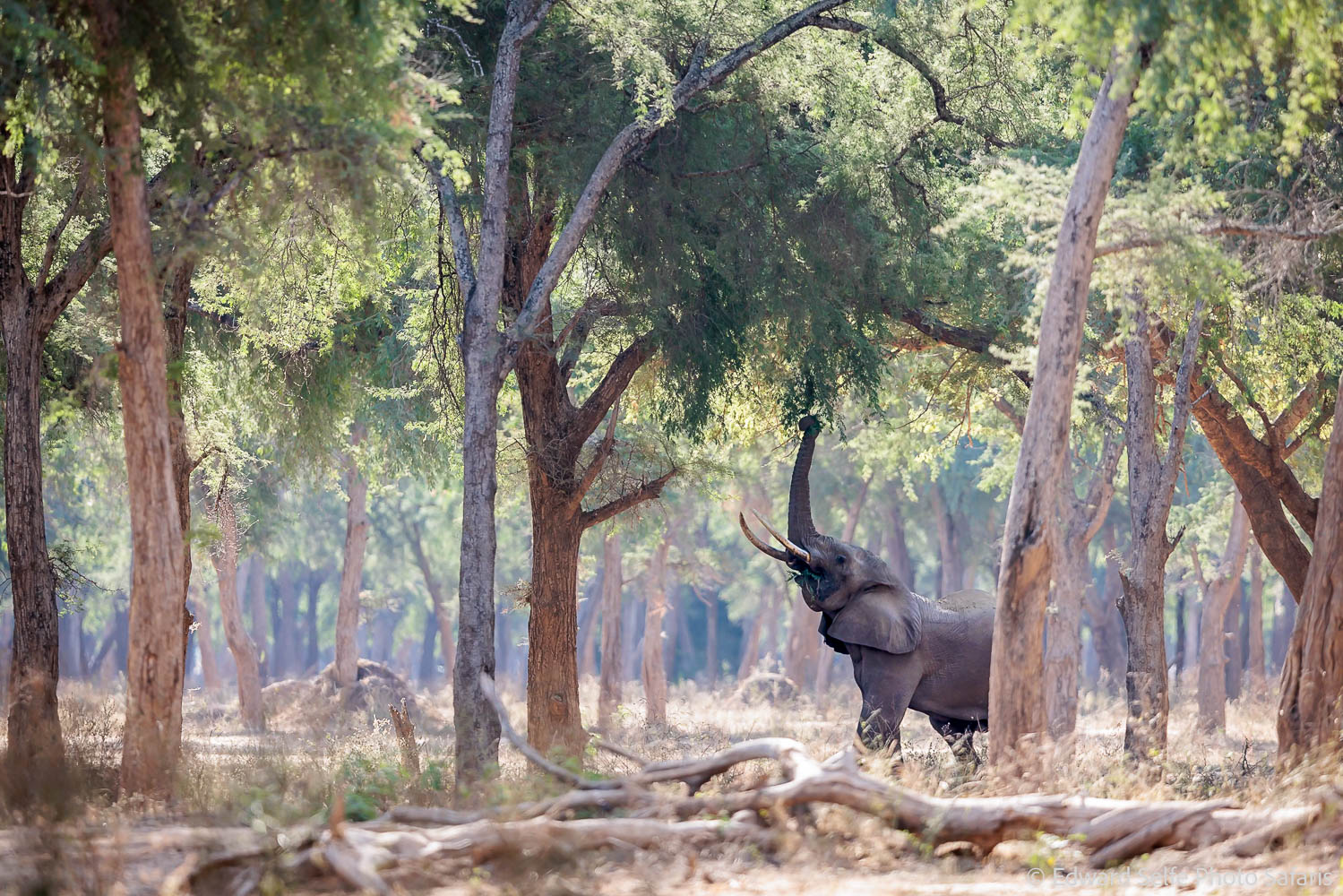
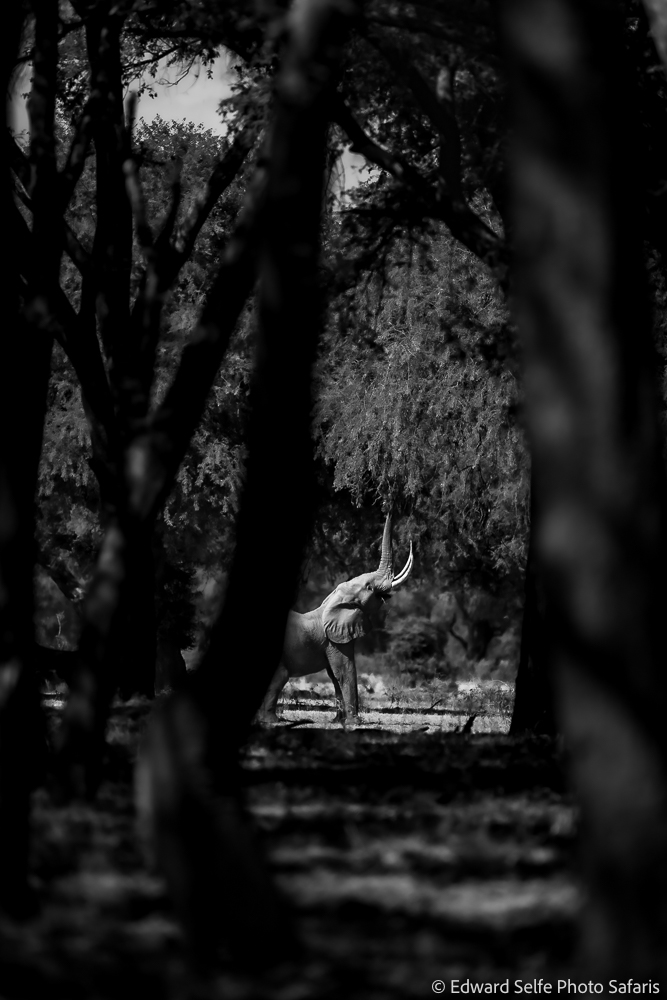
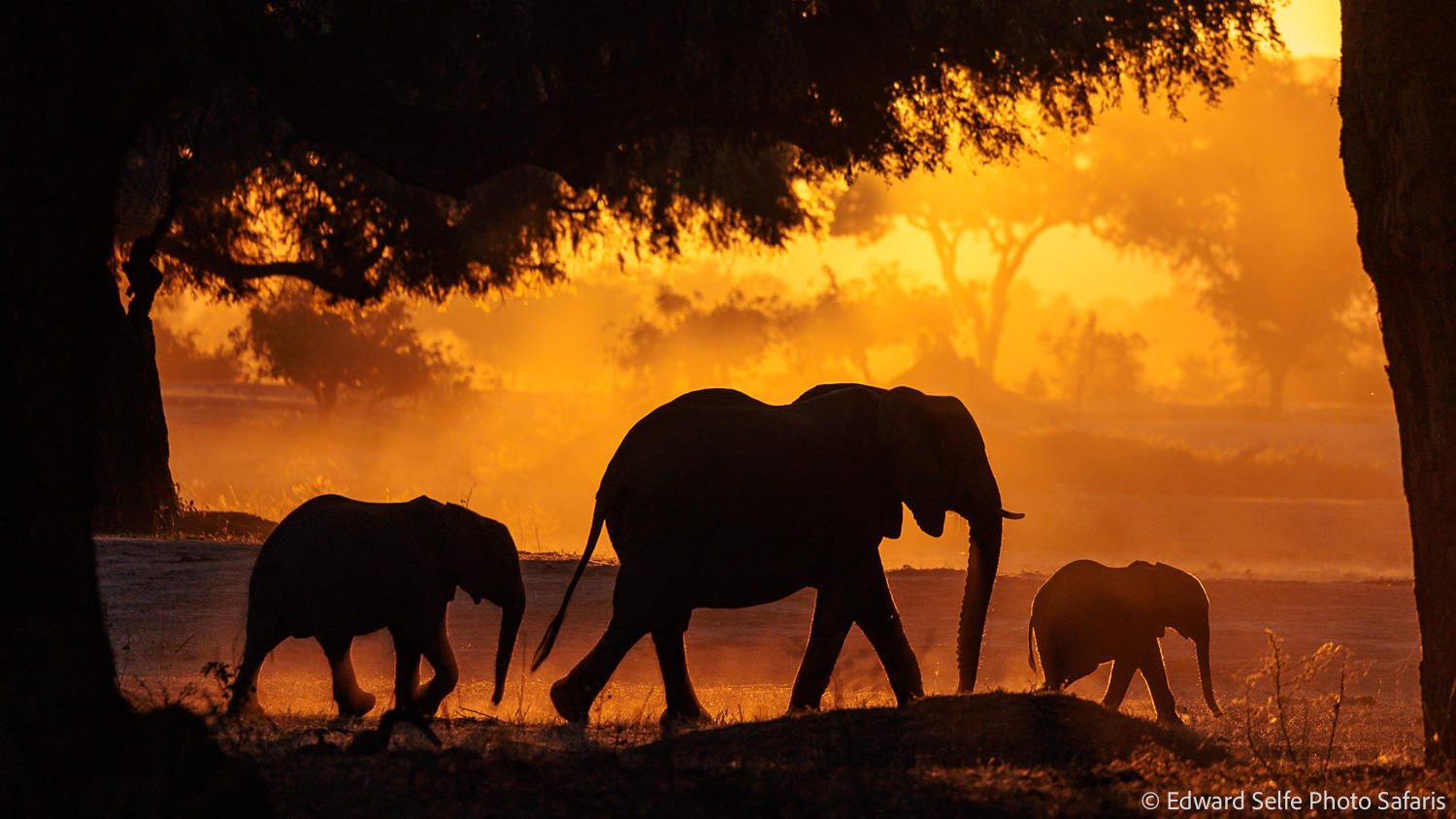
Below are a series of additional images which illustrate methods for photographing in the Lower Zambezi. They use different techniques which build on the ideas outlined above. Notice where we have used dust, foreground details, light, tone and colour to help the viewer identify our subject immediately.
.
.
.
.
.
Thank you for reading; please leave any comments or questions in the section below.