

WELCOME TO MY
WILDLIFE BLOG
UK wildlife is…..
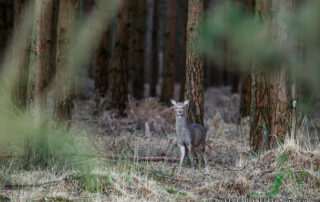
.....not quite as inspiring as African wildlife! I spent some time in the UK recently, at home in Dorset, and tried a couple of times to photograph some of the local inhabitants. A combination of poor light, almost continuous rain and nervous animals led to some slightly disappointing results! Looking at this washed out image of a young sika stag-calf made me realise (again) how lucky we are to live in this beautiful place.
Small Brown Birds….
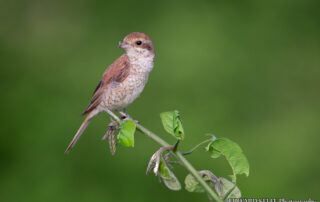
.....can actually look attractive and interesting when there's a nice green environment around them. Here a female Red-backed Shrike and a Southern Grey-headed Sparrow use exposed perches to advertise their territorial presence.
Bush Pig!
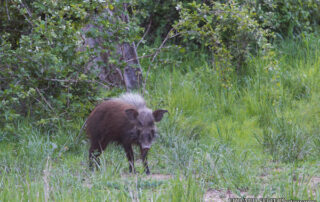
I've been waiting years to see one of these. Most of the other guides have seen them, although only very rarely, and I was finally lucky last night when I found one crossing the road from a lagoon where it had been drinking. Amazingly, it stood for long enough for me to take some photos, even if they weren't very good in the failing light! We don't think that Bush Pigs are rare in the Luangwa, [...]
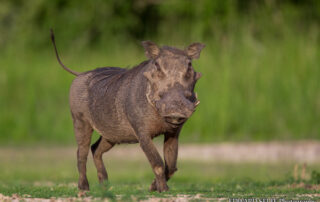
Fiesty Warthog
I was out driving in the park last night at that time of day when everything looks golden! I came across this warthog who was feeding on the short, fresh grass near a small lagoon. Instead of running away when I drove up, he approached with his head held high and his tail swishing. He was frisky, almost fiesty! I took a few photos while he stood resplendent in the sunshine. As I started the engine [...]
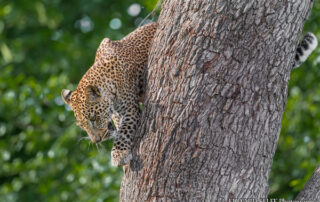
Little Girl
I watched this young leopard for a couple of hours yesterday afternoon. She was very relaxed up in the tree but when the temperature dropped, she decided to come down. Having fed not long before, she had a very full stomach so made a bit of a mess of her descent! I followed her as she scouted around the area and scented various bushes, presumably picking up the spray-marks of the territorial adults in the area. [...]
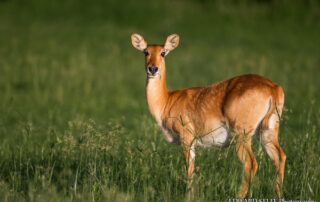
Overlooked….
All small antelope are overlooked because they are plentiful, spend most of their time feeding and don't kill anyone else! But they're very smart creatures (particularly the females) and will often be the first to alert others to danger approaching. I watched this female and a few others feeding in the lush grass yesterday afternoon. Almost at once, they all looked up and gazed in one direction. I didn't think too much of it to begin [...]
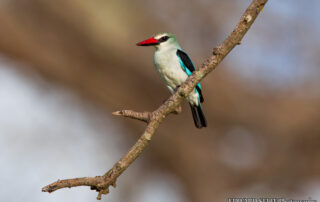
Woodland Kingfisher
We have a large number of visiting migrant birds during the rainy months when the insect life is at its peak, and provides the best source of food. Woodland Kingfishers come all the way from Senegal in West Africa to spend 5 months breeding and feeding in the Luangwa Valley and elsewhere in Southern Africa. They are often found on exposed branches early in the morning, to catch the morning sunshine and advertise their presence to [...]
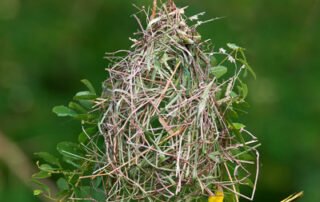
Weaver
Spectacled Weavers are one of many species in the Ploceus genus, which are generally yellow in colour and build beautiful woven nests out of fresh grass. This female Spectacled Weaver is inspecting the nest which the male is constructing. When she's happy with it, she'll 'make home' inside with some soft grasses and leaves and begin nesting. However, this nest still has a fair amount of work to be done, so perhaps she was just checking [...]
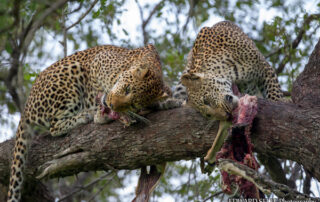
Feast
It's not often that you find leopards together since they're generally solitary creatures. The only exceptions are when a pair come together to mate, or a mother is rearing cubs. In fast fading light, I found this mother and male cub feeding together on the remains of an impala that they had killed in the morning. The image quality is very bad as it was almost dark, and there were lots of branches in the way [...]
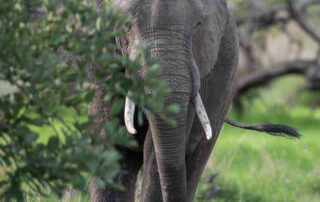
Big Bull
I was driving through the park recently when I saw a large elephant bull pushing through the bushes towards the road. He seemed agitated so I moved forward to avoid blocking his path and waited to see what would happen. As he approached me, he bashed through the bush near the road, creating a nice image of excitement and nervousness. After approaching my vehicle and sniffing all around me, he crossed the road and dropped down [...]
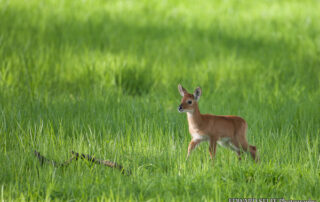
Too much green?
The park is covered in lush new grass growth as the rains continue to fall. On a bright, sunny day, the verdant green is almost unreal, and must certainly appear so to anyone who hasn't been here. I found this little Puku calf on his own in the flooded grasslands yesterday. His mother was feeding in the distance and would have returned to feed him before nightfall.
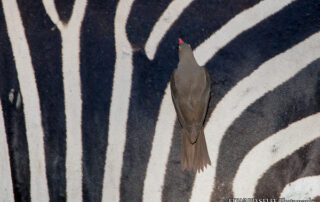
Zebra Portraits
I was approached by a very calm zebra the other day, and I had my longest lens attached, so I took some abstract portraits while he posed.

EDWARD SELFE
I organise & run photographic safaris in the finest wildlife areas on Earth.


